-
Continue reading →: Using older Noritake Itron VFD modules
Now and again you come across interesting parts on eBay, from friends or just rooting around in second-hand stores. One example of this was a huge Noritake Itron 40 x 2 character vacuum-fluorescent display from 1994 (or earlier) which was passed on from a client. Originally it looked quite complex,…
-
Continue reading →: Tutorial – Arduino and PCF8563 real time clock IC
Another option for real-time clock ICs is the PCF8563 real-time clock IC from NXP – so this is a tutorial on how to use it for time, date, alarm clock and square-wave generation purposes. The PCF8563 is another inexpensive RTC that can be used with an Arduino or other platforms…
-
Continue reading →: Tutorial – 74HC4067 16-Channel Analog Multiplexer Demultiplexer
Now and again there’s a need to expand the I/O capabilities of your chosen microcontroller, and instead of upgrading you can often use external parts to help solve the problem. One example of this is the 74HC4067 16-channel analog multiplexer demultiplexer. That’s a mouthful – however in simple form it’s an…
-
Continue reading →: Tutorial – Arduino and the TI ADS1110 16-bit ADC
Moving on from a previous article where we explained an 8-bit ADC – in this instalment we have the Texas Instruments ADS1110 – an incredibly tiny but useful 16-bit analogue-to-digital converter IC. It can operate between 2.7 and 5.5 V so it’s also fine for Arduino Due and other lower-voltage…
-
Continue reading →: Tutorial – Arduino and PCF8591 ADC DAC IC
Have you ever wanted more analogue input pins on your Arduino project, but not wanted to fork out for a Mega? Or would you like to generate analogue signals? Then check out the subject of our tutorial – the NXP PCF8591 IC. It solves both these problems as it has a…
-
Continue reading →: Tutorial – Arduino and MC14489 LED Display Driver
As an increasing number of people enjoy experimenting with retro-hardware and electronics – especially stuff with numerical LED displays – they have discovered the classic MC14489 LED display driver. The MC14489 (originally from Motorola) can drive five seven-segment LED numbers with decimal point, or a combination of numbers and separate…
-
 Continue reading →: Project – Scrolling text clock
The purpose of this project is to build a scrolling text clock that displays the time as it is spoken (for example, “it’s midnight”). This is a quick project – we give you enough to get going with the hardware and sketch, and then you can take it further to…
-
Continue reading →: Arduino and KTM-S1201 LCD modules
After looking for some displays to use with another (!) clock, I came across some 12-digit numeric LCD displays. They aren’t anything flash, and don’t have a back light – however they were very cheap. The purpose of this tutorial is to show you how they are used with an…
-
 Continue reading →: Arduino and TM1638 LED Display Modules
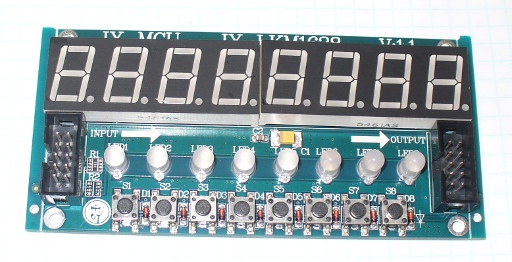
If you need a fast and easy way to add some user input and output to a project, these display modules are interesting and fun. They contain eight 7-segment red LED digits, eight red/green LEDs and also eight buttons for user input. The units can also be daisy-chained, allowing up…
-
 Continue reading →: Tutorial: Arduino Port Manipulation
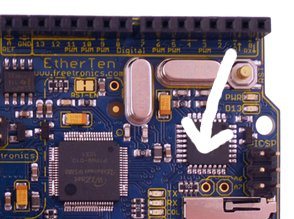
In this article we are going to examine Arduino I/O pins in more detail by using “Port Manipulation” to control them in a much faster manner than using digitalWrite()/digitalRead(). Why? Speed! Using this method allows for much faster I/O control, and we can control or read groups of I/O pins…
Hello,
I’m John Boxall

Welcome to my website “tronixstuff”, a cosy corner of the internet dedicated to our world of electronics. Here, I invite you to join me on a journey of learning by that started in 2010. My amateur radio callsign is VK4JBX. The site is updated irregularly.
Join the fun…
Stay updated with the latest tutorials, reviews and other posts by joining our free newsletter.
Recent posts


This website participates in the Amazon Services LLC Associates Program, an affiliate advertising program designed to provide a means for us to earn fees by linking to Amazon.com and affiliated sites.
 tronixstuff.com
You must be logged in to post a comment.